Dear reader,
Welcome to Bookery, my weekly post on books.
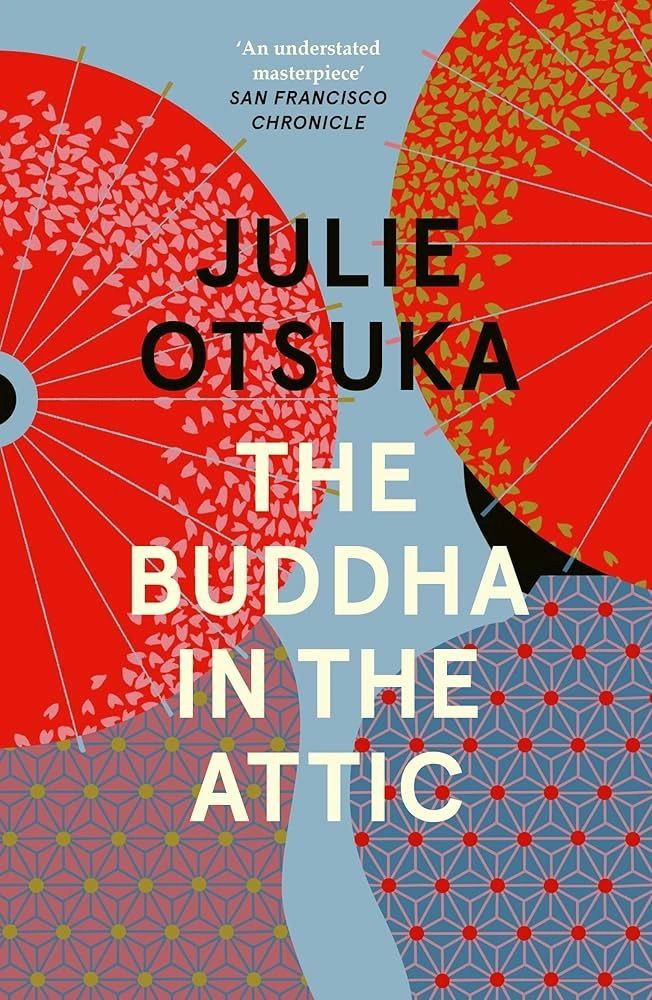
I’m speaking about The Buddha in the Attic, by Julie Otsuka.
There’s something quiet about this book, restrained in its sentences, and poetic in its observations.
Set in the 1900s, the book tells the story of Japanese women who left their country to travel to the USA to marry. Their fiancés were men they had never met. Promises and photographs were sent and the women embarked on a life-changing journey to meet them.
America has no place for their silk kimonos and their dreams. All the country and the men care about, is the women’s ability to work. And by work, I mean hard labour – in the fields, in the laundry shops, in stores, in houses.
But is the pain of that labour comparable to the dejection they must have faced knowing that they’d set out on a journey based on lies they were fed by the men?
The book isn’t about one woman, one couple, one family. That’s the amazing part of this novel. It’s a chorus of voices, the collective we. To me, this single stylistic choice transforms the narrative into something deeply communal and haunting.
Each chapter starts with repetition, almost like a poem. I read some out loud, and there’s a cadence and echo to these lines. They stay with you.
“(…) Some of us had eaten nothing but rice gruel as young girls and had slightly bowed legs, and some of us were only fourteen years old and were still young girls ourselves. Some of us came from the city, and wore stylish city clothes, but many more of us came from the country and on the boat we wore the same old kimonos we’d been wearing for years—faded hand-me-downs from our sisters that had been patched and redyed many times. Some of us came from the mountains, and had never before seen the sea, except for in pictures, and some of us were the daughters of fishermen who had been around the sea all our lives. Perhaps we had lost a brother or father to the sea, or a fiancé, or perhaps someone we loved had jumped into the water one unhappy morning and simply swum away, and now it was time for us, too, to move on.”
Imagine the disappointment they must have felt, and the persecution they must have experienced during the war.
During World War II, Japanese Americans were persecuted in the United States after Japan attacked Pearl Harbour in 1941. Japanese loyalty was under scrutiny. The result? Over 120,000 Japanese Americans, most of them U.S. citizens, were forcibly removed from their homes and sent to internment camps.}
In the end, when the collective voice falls silent, neighbours, customers, employers, and readers realise how much has been lost.
Julie Otsuka’s brilliance lies in how she writes. The language is pared down to its essence.
It’s lyrical without ornamentation.
It is emotional without sentimentality.
And because it doesn’t say so much, its impact is powerful.